
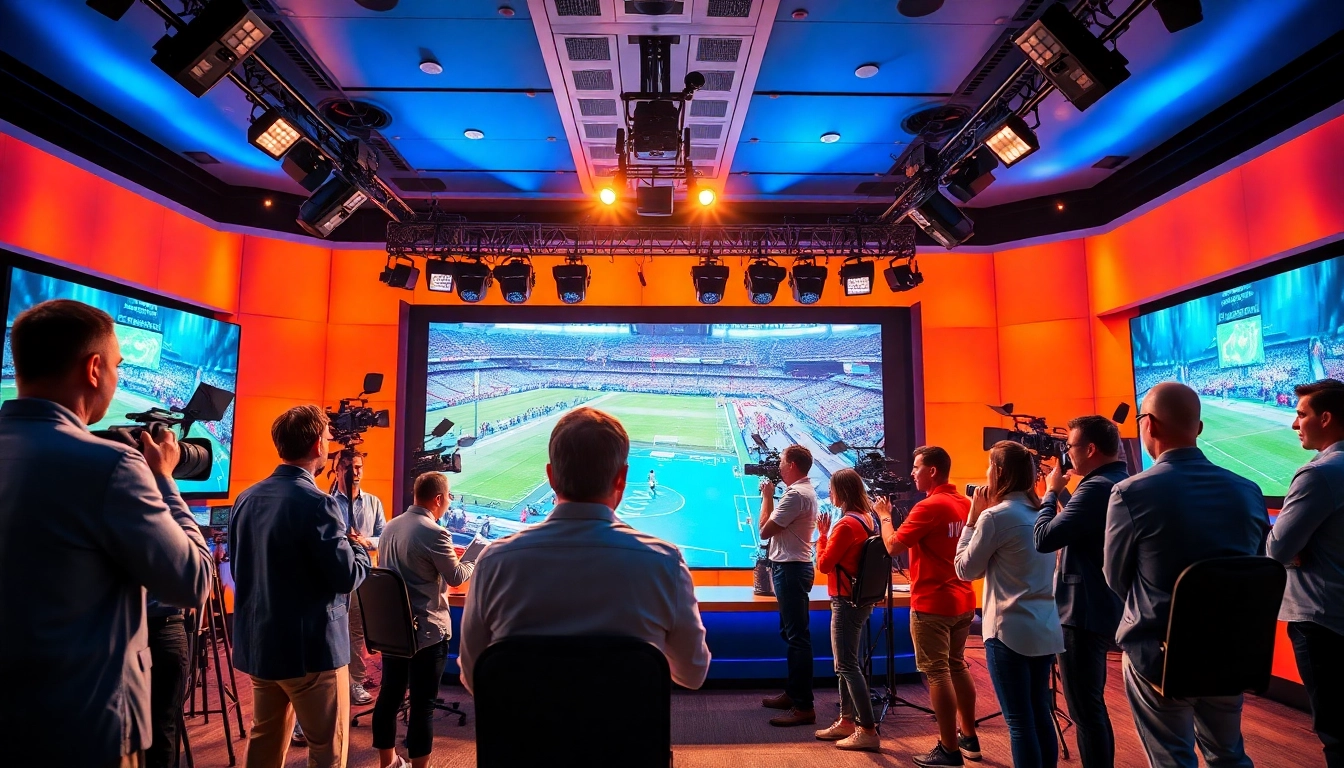
Introduction to Sports Broadcasting
The world of Sports Broadcasting extends far beyond merely showing games on television. It encompasses an entire ecosystem of professionals, technologies, and stories that come together to engage millions of fans worldwide. The meaningful connections forged through sports reporting and analysis not only entertain but also influence cultural discussions and build community. Understanding this field’s definition and significance is vital for anyone interested in media and entertainment.
Definition and Importance of Sports Broadcasting
Sports broadcasting refers to the live coverage and commentary of sports events for television, radio, and online platforms. It serves as a bridge between live action and the audience, allowing fans to engage with their favorite sports, regardless of their location. The importance of sports broadcasting lies in its ability to bring communities together, evoke emotions, and create a shared experience among fans. Through comprehensive coverage, audiences get insight into the games, players, strategies, and, often, the off-the-field narratives that enrich their understanding of the sport.
Evolution of Sports Broadcasting Techniques
The evolution of sports broadcasting has mirrored technological advancements. From the first radio broadcasts in the early 20th century to the advent of television in the 1950s and beyond, each innovation has transformed how viewers consume sports. The introduction of various formats, including multi-camera setups, 3D graphics, and instant replay technologies, has enhanced viewer experience. Moreover, the rise of digital streaming has opened up new avenues, allowing for on-demand access to live events, which further revolutionizes audience engagement.
Key Roles in Sports Broadcasting
Sports broadcasting involves various roles that collaborate to create a seamless viewing experience. These roles include:
- Play-by-Play Announcer: Provides real-time commentary on the game and describes the action as it unfolds.
- Color Commentator: Offers deeper insights and analysis, often providing the viewer with context and backstory.
- Producers: Oversee the overall direction of the broadcast, coordinating between different departments.
- Cameramen and Technicians: Ensure high-quality visual and audio capture, using various equipment to showcase the game’s best angles.
- Sports Analysts: Provide pre-game and post-game discussions, offering expert opinions and predictions based on statistics and trends.
Essential Equipment for Effective Sports Broadcasting
To deliver a captivating sports broadcast, several pieces of equipment are essential. Their effectiveness directly correlates with the quality of the viewer’s experience.
Cameras: Types and Functions in Sports Broadcasting
Cameras are the cornerstone of any sports broadcast. Various types of cameras serve different functions:
- POV Cameras: These cameras provide unique perspectives, enhancing viewer experience by showing angles not visible to the audience from traditional seatings.
- Super Slow-Motion Cameras: Used for replays, these cameras capture intense moments, allowing viewers to appreciate details such as player movements and facial expressions.
- Drone Cameras: A newer addition, drone cameras offer aerial views that enrich the visual presentation of large events.
Each camera’s placement and usage are strategic to create a dynamic and immersive experience for the audience.
Audio Equipment: Ensuring Clear Commentary
Clear audio is just as vital as high-quality video in sports broadcasting. The following audio equipment is critical:
- Microphones: Various types of microphones, including lavalier (lapel) and shotgun mics, are used to capture both studio commentary and on-field sounds.
- Audio Mixers: These tools balance sound levels between commentators, the crowd, and ambient noises to ensure a clean audio feed.
- Headsets: Essential for commentators to hear sound feeds and communicate with the production team during broadcasts.
Broadcasting Software: Tools for Seamless Production
Modern broadcasting relies heavily on software to edit and produce content efficiently. Some essential elements include:
- Editing Software: Programs like Adobe Premiere and Final Cut Pro allow editors to create segments from live events.
- Streaming Platforms: Technologies that facilitate live streaming, enabling broadcasts to reach global audiences.
- Graphics Software: Tools like Chyron and VizRT enhance broadcasts with real-time statistics and visuals.
Techniques for Engaging Sports Broadcasting
Engaging audiences is the essence of effective sports broadcasting. A blend of creativity, storytelling, and audience connection strategies is fundamental.
Storytelling in Sports Broadcasting
Storytelling is a powerful tool in sports broadcasting that goes beyond the game. By weaving narratives around players, teams, and events, broadcasters create emotional connections with viewers. Highlighting player journeys, rivalries, and historical context enriches the viewer’s experience and investment in the game.
Balancing Play-by-Play and Color Commentary
A successful broadcast strikes a balance between play-by-play and color commentary. While play-by-play offers detailed narration of events, color commentary provides context and insight. When used harmoniously, these elements enhance understanding and enjoyment. Examples include transitioning smoothly between live action and analytical commentary that highlights tactical strategies.
Engagement Strategies: Connecting with Audiences
Engaging audiences effectively requires innovative strategies such as:
- Interactivity: Incorporating social media interactions where viewers can share their opinions and reactions during broadcasts.
- Viewer Polls: Engaging the audience by asking for their opinions on plays or predictions during the game.
- In-depth Analysis: Providing rich, data-informed analysis instantly during breaks to maintain interest.
Challenges in Sports Broadcasting
Despite the excitement of sports broadcasting, several challenges persist that require strategic solutions to maintain quality and engagement.
Technical Difficulties and Solutions
Technical difficulties, such as equipment failures or transmission issues, can impede the broadcasting process. Solutions include:
- Redundant Systems: Utilizing backup equipment ensures broadcasts continue smoothly in case of a primary system failure.
- Regular Maintenance: Periodic checks and updates of equipment prevent failures during critical broadcasts.
- Training: Ensuring all staff are trained in troubleshooting common issues enhances response times during emergencies.
Maintaining Audience Interest in Diverse Sports
In a landscape filled with diverse sports, maintaining audience interest can be challenging. Strategies such as:
- Diverse Programming: Offering coverage of niche sports alongside mainstream events to attract various demographics.
- Feature Stories: Presenting compelling stories of athletes and teams that resonate emotionally with audiences.
Adapting to Changing Media Consumption Trends
With the rise of streaming services and social media, adapting to changing media consumption trends is crucial. This includes:
- Multi-Platform Broadcasting: Extending broadcasts across various platforms, including app-based and social networks.
- Short-Form Content: Creating highlight reels and analysis segments tailored for social media to reach younger audiences.
Measuring Success in Sports Broadcasting
To evaluate the performance of sports broadcasts, specific metrics and feedback mechanisms are essential.
Key Performance Indicators for Sports Broadcasts
The success of a sports broadcast can be measured through various KPIs, including:
- Viewership Ratings: Tracking the number of viewers on different platforms to assess popularity.
- Engagement Metrics: Analyzing social media interactions and audience discussions to gauge viewer interest.
- Revenue Generated: Monitoring advertising revenues and subscriptions tied to broadcast events.
Gathering Audience Feedback: Techniques and Tools
Collecting audience feedback is essential for continuous improvement. This can be achieved through:
- Surveys: Conducting surveys post-broadcast to gain insights into viewer preferences and experiences.
- Focus Groups: Engaging with small groups of viewers to discuss broadcasts in detail and gather qualitative data.
Case Studies: Successful Sports Broadcasting Examples
Several key examples demonstrate successful sports broadcasting. These prestigious events often utilize high production values, engaging storytelling, and innovative technology to capture wide audiences:
- Olympic Games: Known for extensive coverage, incorporating multiple cameras, diverse formats, and expert analysis.
- FIFA World Cup: Utilizes advanced graphics and in-depth strategies to engage audiences globally.
FAQs About Sports Broadcasting
What is the main purpose of sports broadcasting?
The primary purpose is to provide live coverage and commentary of sports events, engaging audiences and fostering a shared experience.
How has technology changed sports broadcasting?
Technology has introduced innovations like digital streaming, instant replays, and enhanced graphics, elevating the viewing experience.
What roles are essential in sports broadcasting?
Key roles include play-by-play announcers, color commentators, producers, camera operators, and sports analysts, each vital for a successful broadcast.
How can audience engagement be improved?
Using interactive elements like social media engagement, viewer polls, and compelling storytelling can significantly boost audience engagement.
What metrics indicate success in sports broadcasting?
Success can be measured through viewership ratings, engagement metrics, and the revenue generated from broadcasts.