When Karen in Phoenix noticed her backyard felt like straw beneath her feet, she tried daily quick-sprays from a cheap oscillating sprinkler and still saw brown patches expanding each week. Her soil was hard, roots shallow, and those short sessions were just wetting the top inch — not the root zone. Karen needed a plan that matched her lawn’s size, soil type, and local climate so she could actually see green again.
Why consistent, deep watering works — and what goes wrong with surface-only watering
The problem most homeowners face is surface watering: short runs that leave moisture only in the top inch of soil. That encourages shallow roots that can’t access moisture during heat spells. A healthy turf requires roots at least 4–6 inches deep for cool-season grasses and 6–12 inches for warm-season varieties. For example, a Kentucky bluegrass lawn needs about 1 to 1.25 inches of water per week during active growth, while Bermuda prefers frequent deep soakings in summer.
According to the EPA, properly managed smart irrigation controllers can save substantial water annually; some studies show savings up to thousands of gallons per household when scheduling and run times are optimized (see EPA WaterSense). That’s because deep, infrequent waterings encourage deeper roots and better drought resilience. If you want to revive a dry lawn with consistent, deep watering, you must match run time and pattern to soil depth and lawn size.
Match the watering system to your yard: options and recommended setups
Choosing the right setup starts with identifying the watering challenge.
Small lawns and patch repairs — portable/DIY sprinklers
Problem: A 400–800 sq ft suburban front yard with compacted soil and isolated brown spots.
Solution: Use a high-quality mobile sprinkler or hose-end sprinkler that allows adjustable spray diameter and a soak-cycle approach: run 8–12 minutes, wait 30–60 minutes, then repeat 2–3 cycles to achieve 4–6 inches of penetration in a single watering session. This is a low-cost fix and ideal if you don’t want in-ground work. A WiFi-enabled hose timer can automate those repeat cycles so you don’t have to babysit the hose.
Large lawns — smart in-ground systems
Problem: A half-acre lawn with mixed sun/shade zones and a history of uneven coverage from a basic timer.
Solution: Split the system into zones (sunny turf, shady turf, slopes) and use rotary or spray heads sized for each area. Smart controllers with local weather adjustments and cycle-and-soak programming prevent runoff on slopes and hardpan soils. For example, a smart controller might run a zone for 10 minutes, wait 45, then run again — repeating to allow deeper infiltration without puddling. A WiFi timer from RainPoint can handle that schedule automatically and adapt to forecasted rain.
- Small yard: DIY mobile sprinkler + hose timer; cheap and flexible.
- Medium yard: Split-zone pop-up heads with a programmable timer.
- Large yard: Smart in-ground system with weather-based control and cycle/soak.
Targeted systems for specific turf problems — what to buy and why
Match the root-cause of dryness to a targeted watering solution. Below are common challenges and the most effective setups.
Compacted soil or clay — slow, split cycles
Problem: Heavy clay that sheds water and causes runoff.
Solution: Use short cycles repeated with rests in between (cycle-and-soak). For instance, instead of one 30-minute run that puddles, run three 10-minute cycles with 30–60 minute rests. Smart controllers and many modern sprinkler timers support multiple start times; set 2–3 start times per scheduled watering day. This reduces runoff and slowly moves water into deeper layers.
Sandy soil — slightly longer single runs
Problem: Fast-draining sand that requires more frequent watering to recharge the root zone.
Solution: Increase frequency but maintain depth: 2–3 sessions per week that reach 4–6 inches. Sandy sites might need 1–1.25 inches per week for cool-season grasses; use a simple catch-can test to measure output and calculate run time.
Patches and thin lawns — spot treatments plus overseeding
Problem: Thin blades and sunny hot spots that dry faster.
Solution: Combine shallow tilling, overseeding, soil amendment, and focused deep soakings. For spot watering, a soaker hose or targeted micro-sprinkler gives root-level moisture without wetting pathways. Follow with regular deep waterings to encourage new seedlings to develop robust roots.
ProblemRecommended SystemCycle ExampleClay soilSmart timer, cycle-and-soak3x10 min with 30–60 min restsSandy soilPop-up heads or micro-sprays, more frequent2–3x/week, total 1–1.25" per weekPatchesSoaker hose or spot micro-spraysDeep soak 2x/week until established
Practical product choices and how to set them up for consistent depth
A few concrete examples will make the decision easier. If you have a small lawn under 600 sq ft, a mobile sprinkler with an electronic hose timer that supports multiple start times is a low-cost, effective route. Set 2–3 repeats per watering day to reach the desired root depth. For a 500 sq ft lawn in loam soil, that might be 12 minutes per cycle, three cycles per session.
For larger properties, choose pop-up heads zoned by sun exposure. Calculate output using catch cans (place several cans across a zone, run the system for 15 minutes, then measure) and aim for the weekly depth your grass type needs. If your pop-up heads deliver 0.25 inches per 15 minutes, running three 15-minute cycles with rests equal 0.75 inches that week; repeat as needed to meet your grass’s weekly target.
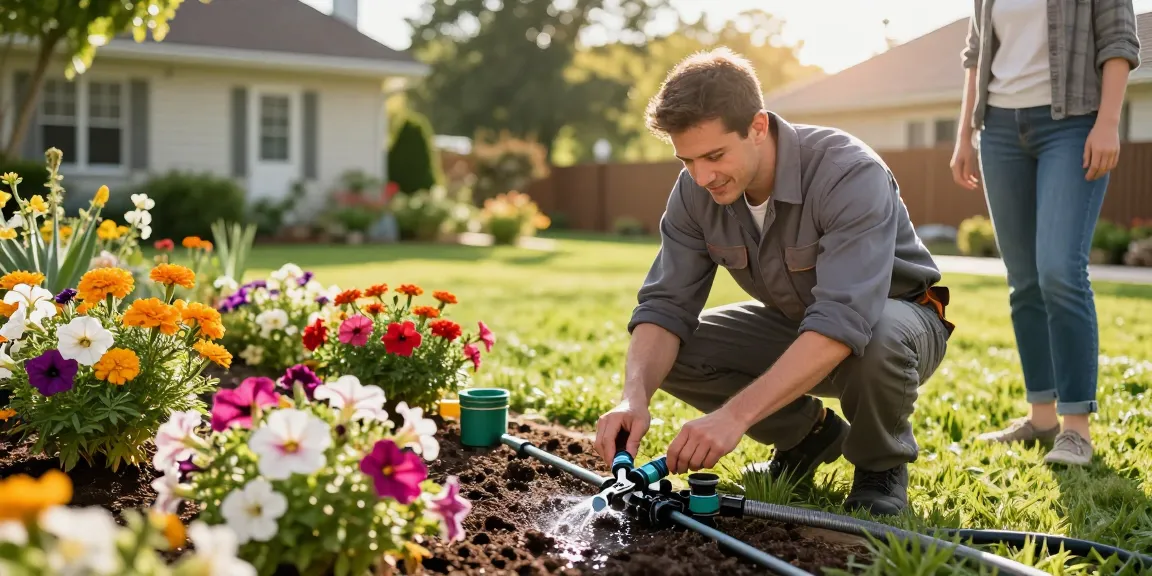
Vegetable beds and flower borders need different gear. Drip lines or soaker hoses deliver water gently at the roots so plants develop deep feeder roots without foliar wetting. A complete drip kit is the right call for a vegetable patch; for flower beds, low-flow micro-sprays or soaker hoses are often best. A WiFi sprinkler timer or controller can manage mixed systems, switching between drip zones and turf zones on different days.
If you want a practical walkthrough on setting up multi-cycle soak irrigation specifically to revive a dry lawn with consistent, deep watering, that page shows typical run times and zone strategies for various soil types and lawn sizes.
Budgeting, savings, and simple maintenance to keep roots deep
Cost varies: a good hose timer and mobile sprinkler setup can be under $150; a smart controller with professional-grade valves and heads may run $400–1,200 installed, depending on zone count. But the savings add up. The EPA’s WaterSense program reports significant water savings from efficient irrigation practices and products; many households cut outdoor water use dramatically by switching to weather-based controllers and fixing leaks (see EPA WaterSense).
Maintenance matters. Check for clogged nozzles, misaligned heads, and broken lines at the start of each watering season. Aerate compacted lawns annually to improve infiltration — this simple step can reduce needed watering time by promoting deeper root growth. And remember: consistency beats frequency. Two deep sessions per week are better than daily shallow sprays.
If you’re unsure which setup fits your yard, think in scenarios: small lawn → DIY mobile sprinklers; large lawn → smart in-ground systems; vegetable garden → precise drip irrigation; flower beds → gentle root-zone watering; potted plants → slow, steady self-watering. That approach helps you choose equipment that actually solves the problem, not just adds more runtime on your timer.